Guide 03 / Protective system
Protection by Construction
Protection belongs to the complete product and its use conditions. Fabric strength is important, but seams, overlaps, retention and maintenance determine how that strength is put to work.
- Textile layers
- Mask assembly
- Seams and coverage
- Retention
Define the hazard and the boundary
Competitive fencing equipment must accommodate fast movement while reducing exposure to weapon-related hazards. Protective clothing, masks, gloves and underarm protection do different jobs and interact through coverage and fit. A design review therefore starts with the intended weapon, user group and competition context, not with a search for the strongest available fabric.
EN 13567:2002+A1:2007 addresses protective clothing for fencers. The FIE Material Rules add equipment requirements for their competition context. Product conformity obligations can also arise under the applicable personal protective equipment legislation. These are related but distinct layers: a competition acceptance decision is not the same process as placing protective equipment on a market.
Check the current standard status, applicable legal jurisdiction and the exact product documentation. A label, declaration or test report must correspond to the equipment being assessed. A report for an earlier construction or a material sample is not automatically evidence for a redesigned garment. We discuss these relationships as editorial guidance, not as a conformity assessment.
Read textile numbers in context
Penetration resistance, cut resistance, tear strength and tensile strength describe different responses to loading. They cannot be substituted for one another simply because each produces a number. A fabric that performs well under one test may behave differently under another probe geometry, loading rate or restraint condition.
ISO 13997 concerns cut resistance, while ISO 13934-1 and ISO 13937-2 address particular tensile and tear methods. These are useful examples of why the method matters; they are not a claim that every fencing garment must be assessed by each of those methods. For a fencing-specific claim, identify the exact required procedure and specimen preparation.
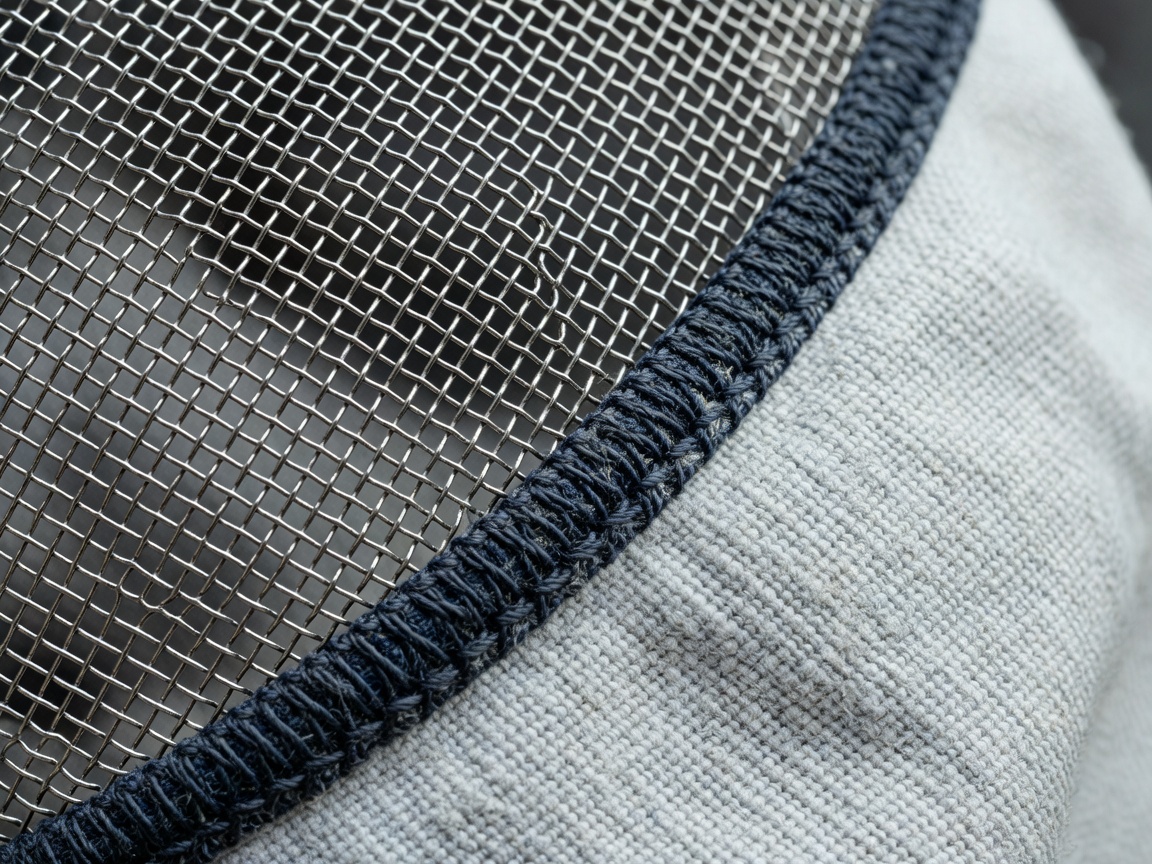
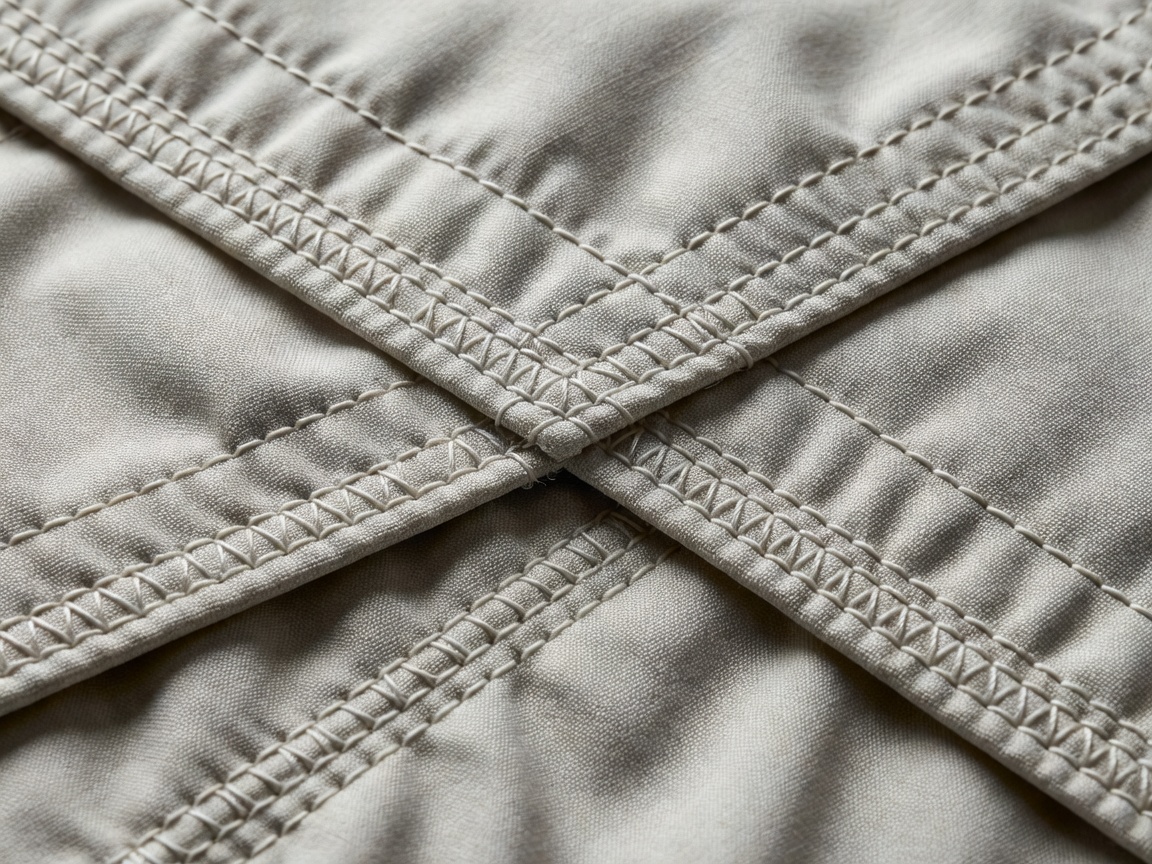
Layer orientation, stitching, coatings and laundering history can alter the tested construction. Record whether a sample is new, conditioned, washed or taken from a used garment. Do not infer whole-garment protection from a small piece of an apparently similar textile. Seam locations and local reinforcement may be decisive in the finished design.
Inspect coverage and retention
A mask combines mesh, a supporting structure, bib, padding and retention components. Each has a different role. Mesh condition cannot be assessed solely by checking the bib, and an intact shell cannot compensate for a retention arrangement that no longer holds the mask correctly. Use manufacturer instructions and the applicable inspection procedure rather than inventing a home impact test.
Garment coverage is also dynamic. A jacket that appears to overlap correctly while standing still may move during extension or a deep lunge. Size selection and correct fastening are therefore part of the protective system. Designers should evaluate representative movement and compatible equipment combinations without treating a static photograph as sufficient fit evidence.
Protective and conductive functions may share a component, particularly around masks and conductive target clothing. An electrical continuity pass says nothing by itself about penetration resistance or structural integrity. Keep those inspection records separate so a favourable electrical result cannot conceal a protective concern.
Keep service history attached to the product
Sweat, repeated washing, abrasion and storage conditions can affect equipment. Follow the care label and manufacturer guidance, including any restrictions on cleaning agents, drying or repair. Do not assume that a more aggressive wash is a safer wash. An undocumented treatment may alter fibres, coatings, adhesives or conductive features.
At routine inspection, look for tears, opened seams, damaged closures, mesh deformation, compromised retention and missing identification. Remove suspect equipment from use while seeking competent advice. Avoid improvised reinforcement or replacement materials unless the manufacturer provides an authorised repair route. A repair that looks neat may still change the protective construction.
Service-life decisions cannot be reduced to a universal calendar interval without a basis. Usage intensity, damage history, storage and product instructions all matter. Record incidents and changes in fit, and retain purchase and product documentation where possible. This history improves decisions but does not guarantee that hidden deterioration will be detected visually.
For design teams, the practical lesson is to connect every protective claim to the specific assembly, method and evidence. For fencers and armourers, it is to use correctly specified equipment, inspect the complete system and stop using it when its condition is doubtful. Neither a workshop article nor a quick demonstration can establish certification or eliminate fencing risk.